Showing posts with label folklore. Show all posts

Saturday, December 24, 2022

The G.O.A.T

Whether you've seen it in travel guides or on social media*, there's no denying that the Gävlebocken, or Gävle Goat, is pretty impressive. 
So, what's the purpose of this giant straw goat, and why are people so desperate to set it on fire?

Photo by Wordshore, CC BY-NC-ND 2.0


Simply put, the Gävlebocken is a giant Swedish Yule Goat. You might be familiar with these straw goats, as they've now started popping up alongside the usual Christmas decorations for sale, only a lot smaller than the big guy.**
While its origins are unclear and often speculated on, it's most likely that the Gävlebocken has links to the Vikings, with many believing it to be a representation of Tanngnjostr and Tanngrisnir. These goats pull Thor's chariot.

Standing at 13 meters in height, this festive straw beast has been an official yearly tradition in the town of Gävel since 1966 and was intended to bring more tourists and trade to the area. There's no denying that it's been a success. If you want to visit, you can find the Goat in Castle Square, erected four weeks before Christmas.
The unofficial tradition of burning the Gävlebocken to the ground has been around for as long as it has, with the first incident taking place in 1966. The Goat isn't meant to be burnt; it's meant to be stored and reused. Setting the Goat on fire, or vandalising it in any way, is classed as a crime which will result in jail time and/or a heavy fine. The torching of the Gävlebocken has been linked to drunken dares, misunderstandings, general vandalism and some people mistakenly believing that burning it will bring luck in the coming new year. Sadly, while many arsonists are caught and charged, more have gotten away with it. If the damage isn't too bad then the Goat can be repaired, though in some cases replacements have had to be made. I'd say that, on the bright side, some years the Goat hasn't been burnt down, but in the chaotic timeline of the Gävlebocken, that still doesn't mean it survived.


The Gävlebocken Timeline: from past to present.

1966 The Gävlebocken is erected for the first time and also burnt for the first time

1967 Survives.

1968 Survives.

1969 Burnt.

1970 The Goat survives six hours before being burnt down.

1971 The Goat is smashed up, and the culprits were never caught.

1972 The Goat collapses due to sabotage.

1973 The Goat is stolen. However, it's a bit difficult to hide a giant straw goat, and it was eventually found.

1974 Burnt.

1975 Presumably, due to some flaw in its construction, the Goat collapses under its own weight.

1976 Someone rams their car into the Goat, causing it to collapse.

1977 Burnt.

1978 The Goat is kicked to bits. Sad, but still an impressive feat of strength. That's a sturdy-looking goat!

1979 Burnt before construction was even finished.

1980 Burnt.

1981 Survives.

1982 Burnt.

1983 Attempts were made to burn the Goat, but luckily only the legs were damaged.

1984 Burnt.

1985 Thanks to tightened security, this Goat had a group of armed soldiers guarding it. That didn't stop it from being burnt down.

1986 Burnt.

1987 Attempts were made to fireproof the Goat. It didn't work.

1988 Survives.

1989 The first Goat doesn't even reach completion before being found and burnt. A replacement is made but doesn't fare any better than the first.

1990 Survives.

1991 Burnt.

1992 Only survives 8 days before being burnt, so a replacement goat is built. And burnt.

1993 Survives.

1994 Survives.

1995 Burnt.

1996 Survives.

1997 Fireworks are fired at the Goat, but it survives with minimal damage.

1998 It survived a terrible blizzard, but determined arsonists still managed to burn it down.

1999 The Goat survives a record two hours before being burnt.

2000 Burnt.

2001 The Goat is set alight by an unfortunate American tourist, who thought they were participating in a Swedish tradition, not realising it was illegal.

2002 Survives.

2003 Burnt.

2004 Burnt.

2005 Two people dressed as Santa and a gingerbread man fired burning arrows at the Goat.

2006 Survives.

2007 Survives.

2008 Burnt.

2009 There are multiple attempts made to burn the Goat. The last one is a success thanks to hackers taking out the webcams being used to watch the Goat, giving the culprits time to get in there and set it alight.

2010 An attempt to steal the Goat via helicopter was prevented when the culprits were caught trying to bribe the security crew to turn a blind eye.

2011 The people building the Goat attempt to fireproof it by soaking it with water. This failed, and the Goat burnt.

2012 Burnt.

2013 Burnt.

2014 Survives.

2015 Burnt.

2016 The Goat is burnt. And then, to add insult to injury, it gets hit by a car. Again.

2017 Survives.

2018 Survives.

2019 Survives.

2020 Survives.

2021 Burnt.

2022 ???


These days the Gävle Goat is well guarded, with a fence, security cameras and a dedicated security team. Still, this hasn't deterred the would-be arsonists, and neither has the prospect of jail time or a hefty fine if caught.  


At the time of writing this post, the Gävlebocken was still standing and unburnt.


*It even has its own Twitter page!
**Mine came from IKEA. He was not, thankfully, flat-packed.

Sunday, June 5, 2022

Feline Folklore

By Day She Made Herself Into a Cat,
by Arthur Rackham.
I'm always slightly amazed when I meet people who say they don't like
cats. I suppose being a cat owner does make me a little biased though. Despite the widespread belief that they're uncaring and aloof, cats are, given a chance, some of the sweetest creatures out there. Even a snarling stray can mellow into a purring lap cat given time.
As a species, they have a mythology and folklore all of their own. They've been deified and demonised in equal measures. There are also many ghostly cats out there, a topic I've written about before and feline cryptids. I will introduce you to the folklore side of things in this post, choosing five areas to focus on. I'm leaving mythology and cryptids for a post sometime in the future, so keep your eyes peeled for those posts. 

  • People often assume that only humans were affected by the witchhunts, but animals suffered alongside them. Cats were one of the animals considered to be a witches' familiar. They were thought to be inhuman spirits or demons in mortal form. In some places it was believed they had the same powers as a witch, enabling them to carry out their owners' evil deeds in their stead. It was pretty standard for them to be killed alongside those accused of witchcraft. The tragic thing is that both the human and animal victims were innocent. The real monsters were those instigating the witchhunts. It was a brutal and unfair period. When they weren't working with witches, it was thought they were working with the Devil himself, ferrying around souls and spreading pestilence. This led to the belief that they caused the bubonic plague, and even more cats were slaughtered in an attempt to stop it. The rat population grew out of control with fewer cats around, allowing the epidemic to spread more easily throughout Europe.
  • Even when considered lucky, it still sucked to be a cat in medieval Europe. For some, cats were the guardians of the farmland, keeping evil spirits and pests away from the crops. But only if buried in the orchards or fields. They were also considered to guard the home against the same problems. It's common for mummified cats to be found in the walls of older houses, though it's not really known if they were walled in dead or alive. This unpleasant tradition was common during the 15th to 18th centuries. Some of these cats have been known to cause bad luck if messed with. I covered the story of one such cat and the chaos caused by upsetting it in one of my previous posts. If the cat was black it would bring even more luck, a complete turnaround from when they were considered servants of the Devil. Cats were luckier at sea than on land. Sailors liked to have a cat on board, not just because having something cute around boosted morale or that they kept pests away, but because it was considered lucky to have a cat on the ship. These days people prefer their lucky cats to be among the living. In some countries, black cats are considered bad luck, but they're considered the opposite in England. If a black cat crosses your path it's a good omen, and one old superstition suggests giving a black cat to the Bride on their wedding day for good luck. While I wouldn't recommend giving any animal as a gift, this tradition lives on with black cats often featured on wedding cards or as ornaments intended to be a keepsake. Not married? Not a problem. A black cat wandering into your home is said to bring in suitors looking for a partner. 
  • It's well known that cats were worshipped in Ancient Egypt, but most people don't realise how loved they truly were. If a household's cat died, the whole family would go into mourning. It was traditional for family members to shave off their eyebrows as a sign of their grief and loss. The cats were often mummified and given proper burials with their own little grave goods. The killing of a cat was considered a terrible crime, whether accidental or not, and the sentence for such a crime was death. Hypocritically, there is historical evidence of cats being bred for the sole purpose of being sacrificed to the very Goddess that made them sacred. They would be killed, mummified and then given as offerings at temples or buried in tombs. Mummified cats are so prolific that in 1890 around 180,000 of them were actioned off in Liverpool for use as fertiliser. Awful as that is, I suppose we should be glad they didn't get eaten, like so many of their human counterparts.
  • In the UK it's believed that a cat's behaviour can predict the weather. Who needs the weather report when you can just watch a cat? A cat clawing your furniture or getting the zoomies means that windy weather is coming. In Wales it was believed you could tell that it would rain if your cat was washing its ears a lot, and in other areas a cat sneezing predicted the same thing. Sailors believed that if the ship's cat fell overboard, a storm would soon follow that would sink the boat. Having a ship's cat that was black was said to guarantee fair weather. In Europe, you could keep your sea-going family members safe at sea and ensure that they'll have good weather by taking care of a black cat.
  • Most cats won't ruin your Christmas unless they get at the turkey or knock over the tree, but one cat joyfully makes the festive season stressful: The Yule Cat. The oldest written records of this beast come from the 19th century, but it's believed that the Yule Cat has been around for much longer, possibly even tracing its history back to the Dark Ages. Hailing from Iceland, it's also known as Jólakötturinn and is one of the country's many terrifying Christmas spirits. Oddly, this festive feline is a little more interested in fashion than your average moggy, specifically whether or not you got new clothes before Christmas Eve. This massive moggy towers over houses and stalks the countryside, looking for people to bother. It'll leave you be if you've got a new set of clothes. If you haven't then it will pounce, and devour you. Maybe think twice about complaining next time your Granny buys you socks for Christmas?

Well, dear readers, I think we can all agree that cats have got a bit of a raw deal over the years. Sadly, many people still think ill of cats thanks to the darker parts of folklore and superstition prevailing in some way or another. Some people will even go out of their way to cause them harm. I shouldn't have to say this, but it's worth noting that HARMING A CAT OF ANY COLOUR WON'T BRING YOU GOOD LUCK, GOOD HEALTH OR WEALTH. Many superstitions or elements of folklore have their roots in a much darker time when people didn't have the knowledge we have now.

Do you have any favourite pieces of folklore relating to cats that I haven't included? Any stories you want to share about cats and the paranormal? Leave them in the comments below, or tag me in a tweet!

Thursday, March 31, 2022

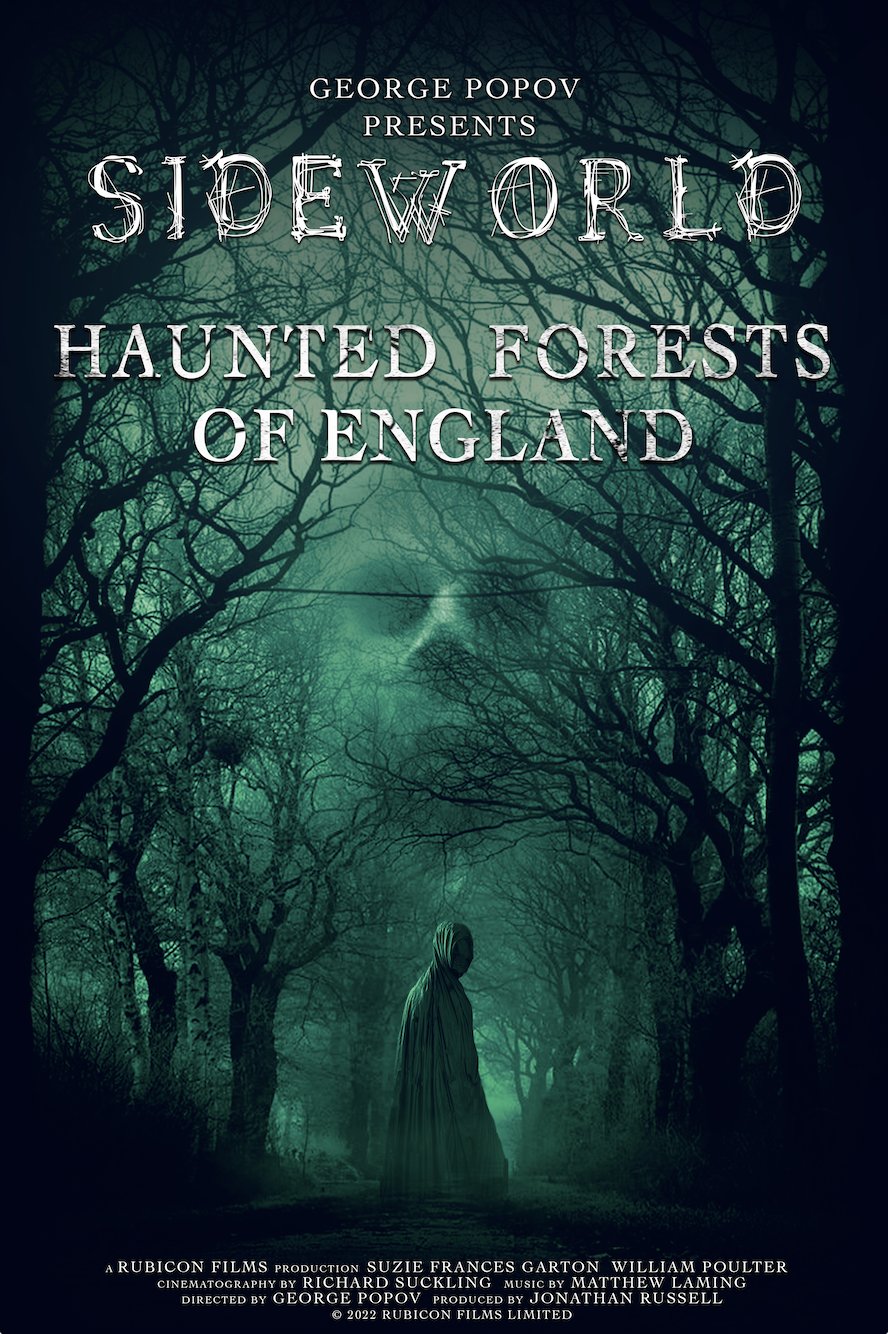
Sideworld: Haunted Forests of England


Forests are beautiful, sometimes mysterious places. While most are the sort of places you can go for a long walk to admire nature and clear your head, some hide dark secrets in their sunlight dappled shadows. I covered those sorts of forests on this blog before, when I shared the stories of Epping Forest and the Rendlesham Incident, but those are far from being the only areas of haunted woodland in England. If, like myself, you are fascinated by eerie tales or are looking for a new haunted place to visit, the new documentary Sideworld: Haunted Forests of England is perfect for you.


The Plot

Director George Popov steps in as narrator, acting as our guide as this documentary leads us on an unforgettable journey into the depths of three of the most haunted forests in the UK:          
Wistmans Wood, Devon - looking like something straight out of a fairy tale, this forest is home to both benevolent and malevolent spirits. The most famous of these are the infamous bloodthirsty Wisht Hounds and their master, the Huntsman.    
Cannock Chase, Staffordshire - a beautiful forest hunted by sinister creatures, both natural and supernatural, including an unearthly Pigman that roams the forest, numerous UFO sightings, true crime and the dreaded Black-Eyed Children. 
Epping Forest, Essex - a personal favourite of mine. A place haunted by many, with links to the Krays and Dick Turpin. It's also home to the Drowning Pool, a sinister location with a tragic backstory, that has allegedly claimed the lives of many an unwary walker.


About the Documentary

You'll have to forgive me for not giving away more than I
already have, but I really want anyone who chooses to watch the documentary to be able to do so without any spoilers and hope they will enjoy it as much as I did. Since Sideworld was bought to us by Rubicon Films, I 
had high hopes for it before I'd even cosied up on my sofa and hit play. I've covered one of the studio's films on this blog once before, The Droving, which I very much enjoyed and highly recommend. 
Sideworld is hauntingly beautiful and atmospheric, a true pleasure to watch. 
Filmed on location, the forests are both enchanting and eerie. Thanks to the documentary's stunning cinematography, you really feel like you're there, slipping through the lush, shadowy woods to seek out the ghosts for yourself. It is beautifully filmed. Not only do the forests become as much a character in these stories as the people who feature in them, but by the end of the documentary you'll want to visit them for yourself. The film also features art by Todor Popov and other artists, helping to further illustrate the stories and unseen ghosts.
George Popov is an excellent narrator, bringing the haunting tales to life with the help of Suzie Frances Garton and William Poulter, who step in to read us the eyewitness accounts, doing a brilliant job at bringing them to life. I've never been a fan of dramatic re-enactments, finding them to be a bit cheesy, so I found the way Sideworld presented people's encounters in the forests quite refreshing. These stories are blended with the re-telling of historical events and some of the most chilling folklore I've ever had the pleasure to hear. It manages to be both suspenseful and educational, an exciting program to watch.

All in all, I found this documentary immensely enjoyable. 
Even more exciting, Haunted Forests of England is only the first project to come to us from Sideworld, with more planned in the future. Personally, I'm looking forward to seeing what they bring to us next.


Director: George Popov
Producer: Jonathan Russell
Starring: Suzie Frances Garton, William Poulter
Featuring art by Todor Popov
Runtime: 1 hour and 9 minutes
Subtitles: English
Made by: Rubicon Films


Saturday, June 5, 2021

Sleep Paralysis: Science vs Supernatural

You wake up, but something's wrong. You're snug in your bed, surrounded by the silence and darkness of the night, unable to tell whether it's very early or very late. You're wondering why you woke up when you realise that you can't move. Try as hard as you can, you can't even twitch a finger. Then, out of the corner of your eye, a shadowy figure starts to stalk across the room towards you, and fear starts to kick in.
While this sounds like the start of a horror movie, many people experience this in real life on a nightly basis. Reading this, you yourself might be personally acquainted with this phenomenon.
But what's happening here?

The Nightmare by Henry Fuseli, 1781, public domain

This is Sleep Paralysis 
This sleep disorder is so common that it's recognised by most medical bodies. It's featured in movies and books. It's been scaring people for centuries but these days, thanks to the internet and social media, more and more people share their experiences with it and are helping each other to cope. It's an unpleasant thing to suffer from, especially for those unfortunate folks who experience it on a near-nightly basis.
A Sleep Paralysis attack usually starts with its namesake, paralysis. A victim will wake up but find themselves unable to move. This is scary enough on its own, but it often comes with the feeling of being touched in some way, plus various visual and audio hallucinations. People have seen shadow figures, aliens, monsters, ghosts and a hag-like figure, to name a few. Audio hallucinations include static and other electrical noises, hissing, indistinct whispering, growling, screaming and sometimes clear voices. Pressure is often felt on the body, commonly on the chest, and is associated with something sitting on the victim. These experiences, combined with the inability to produce sound, to call for help, add up to a truly nightmarish situation. Thankfully, scientists and medical experts have done quite a bit of research into the subject, giving us an explanation for what's happening.

The Scientific Explanation 
Sleep Paralysis is classed as a type of Parasomnia. Your body is completely relaxed in sleep, so you don't move around too much or act out your dreams while in the REM stage of your sleep cycle. Think of it as a built-in failsafe; your body slips into a harmless form of temporary paralysis to protect you. But when the brain and body slip out of sync, Sleep Paralysis can occur. The brain wakes up early, becoming conscious while the body is still relaxed. Unfortunately, this often happens while the brain is still transitioning to or from REM sleep, resulting in audio and visual hallucinations. Sleep paralysis can occur as you're waking up, but also as you're falling asleep.
Sleep Paralysis is frightening, but harmless, and can last anywhere from seconds to a minute or so. An exact cause has yet to be discovered. Still, studies have shown many possible causes for this, including but not limited to sleeping on your back, poor sleeping patterns, food or drink consumed before bed, insomnia, anxiety and PTSD.

Sleep Paralysis and the Paranormal
Sleep Paralysis has been recorded for thousands of years, but we didn't always have science to explain what was happening. This has lead to it being blamed on things that go bump in the night and explains why some people refer to it as Old Hag. In the past it was believed that the pressure some sufferers feel on their chest was caused by a witch as she sat there, attempting to suffocate her victim or harm them through magic. This belief mostly appears in Europe and America, and some still believe it today. But if you think the spooky side of Sleep Paralysis beliefs and folklore is limited to witches, then you're wrong. Historically, in some countries, it was also seen as a sign of a vampire attack. Ghosts, spirits, demons, and Shadow People have often been seen as possible causes in many cultures. People believe them to be the cause and blame the whole thing on possession or attempted possession. In alleged encounters with Aliens, Sleep Paralysis is very common, with the victims believing Sleep Paralysis is the precursor to a visit or even part of an abduction.


Thankfully science has solved this spooky medical mystery for us, revealing anything experienced just to be a waking dream, but it's still a fascinating subject. My own experiences stemmed from anxiety, combined with an appalling sleep schedule and a nasty habit of sleeping on my back. As a teen I found it terrifying, as I had no idea what was happening, but as an adult I understand what's going on and what caused it. When having an attack, I'm prone to auditory hallucinations. I tend to close my eyes as tightly as possible when I realise what's happening and try to move my fingers, as I find that can snap me out of it. And while I'm working on that, I have to put up with whispering voices, the sound of movement in my room and a feeling of static. I've felt what felt like someone leaning on me, but that's rare. Rarer still, for me, are visual hallucinations. I've only had that happen to me once, and it happened at the worse possible time because I wasn't even in my own home; I was sharing a hotel room with a friend at a convention. Everything was fine at first, the room lit by the streetlights outside and myself just lying there trying to move my fingers. But, for whatever reason, this time around I didn't bother keeping my eyes closed and got to see a shadow figure come crawling out of the bathroom. It dragged itself across the room, between our beds and paused for one all-to-long moment before crawling under my hotel bed. Then I managed to move my pinky finger and I was up in a flash, and everything was normal again. The only reason I didn't check under my bed was that it was one of those solid block beds, and it didn't have anything to check. Yup, my first and (thankfully) only visual experience left me shaken, and I've got a lot of respect for those who suffer from visuals regularly.

I haven't included any treatment or coping advice because I am not a medical professional or an expert. This post is simply meant to be informative. I can only encourage you to do your own research into that or to contact a doctor. While there may be no magic cure for Sleep Paralysis, with help it can be got under control. 
The NHS website dedicated to the subject suggests seeing your doctor if you've become scared to sleep because of your Sleep Paralysis attacks, are experiencing anxiety because of it, or suffering from tiredness due to lack of sleep.

Friday, April 30, 2021

Cryptid Corner: The Owlman of Mawnan

 For thousands of years, people have been recording sightings of mysterious creatures. Some of these critters may be survivors of a bygone age or even species yet to be properly discovered and named. Others are just mind-bogglingly weird, unexplainable or flat out terrifying like the subject of this blog post.
America has the Mothman. We have...THE OWLMAN OF MAWNAN.


The Story
The beast stood like a man and was as tall as one too, with dark feathers, sharp talons, glowing red eyes and a gaping maw of a mouth. Its appearances were accompanied by spine-tingling hissing and screaming noises, as well as loud hoots while it soared through the sky. While it sounds like a monster from a bad B movie, this potential cryptid caused quite a stir when it was first sighted. 
It was spotted in April 1976 by June and Vicky Melling, who were on holiday in the area with their parents. The two children were exploring on their own and decided to investigate Mawnan Church. As they approached they started to hear weird noises and, looking up, spotted a huge creature flying around the steeple. It appeared to be half-man half-bird, with dark feathers and fearsome glowing red eyes. Terrified, they ran back to the campsite to tell their parents, who were so unnerved by this story that they called off the holiday, going home three days early. The girls' father, Don, would later approach Tony "Doc" Shiels, a local paranormal researcher and magician. While Don was unwilling to allow Shiels to interview the girls, he was eager to share their story and a picture drawn by June. Fascinated by the tale, Shiels would investigate the sighting. The story would be included in a small pamphlet written by Anthony Mawnan-Peller, which was mostly sold locally and was titled Morgawr: The Monster of Falmouth Bay.
The next sighting happened in the July of the same year. Two teens, Barbara Perry and Sally Chapman, were camping in the area and had the shock of their lives when they encountered the creature. It was the eerie hissing noises that drew their attention to the Owlman, which stood not too far from their campsite and was apparently unimpressed by their presence there. Probably because they were laughing at it; Barbara and Sally were aware of the Owlman story and were convinced it was someone in a costume until it took off into the air with a hiss and a screech, flying off over the woods. The shocked girls huddled in their tent for safety and reported what they'd seen the following morning. What they described was near identical to what June and Vicky had seen, but with the addition of pincer-like talons. Like Don Melling, they would go to Tony Shiels with their story.
Sightings have continued over the years, in 1978, 1989, 1995, the 2000s and the most recent sighting was in 2019, by a couple of paranormal investigators.
The Owlman isn't the only thing haunting the location, as there have been quite a few reports of glowing orbs being sighted around the churchyard. Whether these are corpse lights or spirits remains to be seen.

 Mawnan Church - Photo by Tim Green.
CC BY 2.0

The Theories

The Paranormal
It's been suggested that the Owlman is a creature linked to the occult rather than some kind of naturally occurring entity. Some have pointed fingers at artist Max Ernst, who visited the area in the 1930s with a small group of friends and performed summoning rituals there. One of the things allegedly summoned was said to be part nightjar, part human. While there's no real evidence of this creature, Ernst would become fascinated with birds, to the point that his own artistic alter ego was a humanoid bird named Loplop, and it has been said (though not by Ernst.) that these are linked to the Owlman. This fascination with bird creatures would be shared by artist Leonora Carrington, who was dating Ernst at the time of his visit to Mawnan and was believed to be one of the party members there with him. Her works have also included dark bird-like figures, though not as much as Ernsts. Curiously though, by some strange coincidence, the first 1976 Owlman sighting took place around two weeks after the death of Max Ernst. Many people believe that this and Ernst and Carrington's avian fascination are proof that they summoned the Owlman. Whether or not there is a link, the two artists remain synonymous with the Owlman, even after their deaths.
Other theories have suggested that the Church and its grounds lay directly over a leyline. These mysterious and fascinating energy lines have been linked to many hauntings and creature sightings over the years, so if this is true then it's no surprise that paranormal events have occurred there. Another popular paranormal theory is that the creature is of extraterrestrial origins, as Cornwall was a hotspot for UFO sightings throughout the 1970s.

The Hoax
This theory claims that it was all faked by Tony "Doc" Shiels. But with so many people involved, this theory can't be proven. It seems to be based on the fact that he was the only one investigating the sightings at the time. While he may have known some of the witnesses, there's no way he knew all of them, as some were tourists from outside of the UK. Thanks to the pamphlet that was published, anyone living in or visiting the area could have read the story and claimed that they had seen the creature. Take Barbara and Sally, for example. Both of the girls are known to have read about the Owlman. With this in mind and the common knowledge that if you saw something then Shiels was the man to go to, then surely any potential false claims lay with the witnesses, not the investigator.

The Mistaken Identity
It could have been an owl. To be exact, a Eurasian Eagle Owl. 
These birds aren't native to the UK and are one of the largest owl species out there. With a wingspan of 6ft (7ft in some rare cases.), an owl of this breed would look massive while airborne.  They also make a lot of different noises, including hisses, screeches and hoots. Sound familiar? The only difference is that they don't have glowing red eyes, gaping holes where their mouths should be and aren't as tall as a man. However, if seen by those unfamiliar with them or at dusk, it's possible that the eyes could be deceived. It's been theorised that the Owlman was nothing more than an escaped pet, perhaps looking for a place to roost, which would explain why it was so interested in the steeple of the church.


So is the story of Cornwall's Owlman over? Very probably not, but only time will tell when, or if, it will be seen again. Thankfully, if this beast is seen, it isn't a sign of ill omen, unlike its moth-like counterpart in West Virginia. The Mothman seems to have been the herald of disaster. The Owlman is just a jerk who likes scaring people. 
But does it exist? Bird/Human hybrids are common in folklore and appear worldwide in myths, legends and even religious beliefs. It's no surprise that one should appear in the UK. As someone who loves a good folktale or urban legend, I'd love to think it exists, but the sceptic in me wants more proof before I believe in it. What about you, dear readers? What's your opinion on the Owlman of Mawnan? Fact or fiction? Let me know in the comments below, or tag me in a Tweet!

Sunday, November 29, 2020

Island Life: My Top5 ACNH Spooky Villagers

Pull up a log and help yourself to a marshmallow.


Relaxing on my little island, I take the time to admire the beautiful sunset and sparkling ocean. Sure, I owe a ridiculous amount of money to a Tanuki, and I've been stung by wasps after shaking a tree from the wrong side, but life doesn't get much better than this.
It's just a shame it isn't real life.
Yes, like so many other gamers, I've fallen in love with Animal Crossing New Horizons. Despite everything I planned to do with my time during the national Lockdown that took place this year, most of that time was instead spent playing Animal Crossing*. The question is, why make a blog post about it? Isn't this blog meant to be about ghosties, ghoulies, long-legged beasties and things that go bump in the night? The answer is yes, yes it is, and that's exactly why I've written a post about it. With characters straight out of folklore, mythical creatures and haunted artefacts, Animal Crossing has always had one foot firmly planted in the paranormal. That's actually one of the reasons I, and a lot of other people, love this game so much. With so many subjects to cover, I thought I'd start with the villagers themselves with a Top 5 list. So sit back and relax, as we enter the world of Animal Crossing and I introduce you to my Top 5 Spooky Villagers.


Lucky
I think you can already see why he's on this list, because clearly Lucky's luck ran out at some point. Wrapped from head to toe in bandages, with only his ears and tail free, this lazy dog villager is well and truly mummified. And if you need more proof that this good boy is among the walking dead, his only visible eye is an unearthly glowing yellow. That's not normal, that's the sort of thing you need to have a serious talk to your vet about.
Some people seem to think that the only animals mummified by the ancient Egyptians were cats, but this isn't the case. While some animals that suffered this fate were beloved family pets that had passed on and were treated the same way in death that any other family member would be, others were sacrifices to various Deities. These included a wide variety of animals, including man's best friend. Evidence of this is recorded every year, one of the biggest finds being found in 2015 when around eight million mummified canines were unearthed by Archaeologists in the catacombs dedicated to Anubis, located in Saqqara, South Cairo.


Coco
Coco is a rabbit villager, with the Normal personality and, let's be honest, is a complete sweetheart. A lot of players make the mistake of assuming that her name and appearance are influenced by coconuts, which also have three holes, very similar to the ones Coco has for her eyes and mouth. The truth is a lot darker than that. This charming bunny is actually based on a Haniwa. 
Haniwa are clay figurines of a ritual nature, specifically funerary objects that were buried along with the dead in ancient Japan, or used to mark burial sites. They first started off as simple clay cylinders, but over time they evolved into more intricate forms; human figures, houses, military equipment and even animals. These items were meant to serve or act as a companion for the dead; which of these was Coco's purpose we may never know. Coco isn't the only example of a Haniwa figure to appear in Animal Crossing either, others exist in the form of Gyroids.


Clay
Out of all the villagers on this list, Clay is my favourite. He's
adorable, delightful and I discovered him by accident while on a hunt for Pietro. Yes, that's right, I gave up my hunt for everyone's favourite killer clown sheep so that Clay could take the last empty spot on my island. I initially mistook him for a Cub villager, but he's actually a Hamster and comes with the Lazy personality.
Like Coco, he's also based on a type of ancient Japanese figurine and, although sometimes found in graves, a type that's not always of a funerary nature. Clay is based on a Dogū figurine, which were made only during Japans Jõmon period, making some of the oldest of these figurines around 10,000 years old. Their true purpose is debated, but they're considered to be evidence of a form of early religion, having been found in many places. It's possible that they could be depictions of some unknown deity or fetish of some sort, but some historians theorise that they may just have been toys. Even in modern times, these mysterious objects have captured peoples imaginations, inspiring everyone from artists to conspiracy theorists.


Julian
Villagers with the Smug personality type can be an acquired taste,
you either love them or you hate them. I can't stand most of them, but I'll make an allowance for Julian because, despite being classed as a Horse type villager, he is actually a Unicorn. And who doesn't like unicorns?
Versions of these mythological beasts have been recorded since the Bronze Age, in countries all over the world. In fact, nearly every country seems to have their own version of the Unicorn, making it a very widely recognised creature. Often seen as a symbol of purity, they're also seen as a symbol of royalty and are a popular fixture on peoples coats of arms. The horn of a unicorn was especially in demand, as it was said to be able to purify poisons and heal all manner of illnesses, the tricky part was getting your hands on one. According to legend, only a virgin pure could tame a unicorn. They were used as bate in hunts, distracting the beast while hunter took advantage of the Unicorns sudden docileness. Smart merchants could make a small fortune selling cut down narwhale horns as the genuine article, the Vikings used to do so regularly. Most people back then had no idea what a narwhale was, it was an easy trick to pull off.


Hans
Hans is another Smug villager and is a Gorilla type villager. While
Gorilla types may be one of the most disliked varieties of villagers, I feel like we should give Hans a break. After all, everyone agrees that he's a Yeti, not a Gorilla. 
Also known as the Abominable Snowman, the Yeti comes to us from the Himalayas and is similar to other cryptids such as Bigfoot. Reports of these creatures go back centuries and many people have searched for them in an attempt to prove their existence, including Alexander the Great in 326 BC. Personally I'm split 50/50 on the topic, as I believe that an intelligent creature that's evolved for that type of climate could easily out-fox anyone hunting it and, as previously stated, reports of the Yetis existence go back thousands of years. Even the scientific community seem a little torn on the subject, despite extensive tests having been done on hair that's been found. Traditionally depicted as being covered in white, shaggy hair just like Hans, there are reports of Yetis sighted at lower altitudes with ginger or black hair, and it has been suggested that there may be more than one type of the creature roaming around. I wish I could say that they are entirely solitary creatures, but over the years there have been some reports of them harassing shepherds and attacking their herds.

So what about you, readers? Are any of your favourite spooky villagers in this list, or do you prefer one of the ones I've left off? What are your favourite spooky bits of Animal Crossing lore?
Let me know in the comments below or tag me in a post on Twitter, I love hearing your stories.


*Well, that and Gwent. Lots of Gwent. 


Friday, October 16, 2020

The Art of Terror: Early Haunts


"𝓕𝓸𝓾𝓻 𝓮𝓪𝓻𝓵𝔂 𝓪𝓷𝓭 𝓲𝓷𝓼𝓹𝓲𝓻𝓪𝓽𝓲𝓸𝓷𝓪𝓵 𝓰𝓱𝓸𝓼𝓽 𝓼𝓽𝓸𝓻𝓲𝓮𝓼, 𝓶𝓸𝓼𝓽𝓵𝔂 𝓯𝓸𝓻𝓰𝓸𝓽𝓽𝓮𝓷 𝓲𝓷 𝓽𝓱𝓮 𝓭𝓮𝓹𝓽𝓱𝓼 𝓸𝓯 𝓵𝓲𝓽𝓮𝓻𝓪𝓻𝔂 𝓱𝓲𝓼𝓽𝓸𝓻𝔂 𝓪𝓻𝓮 𝓫𝓻𝓸𝓾𝓰𝓱𝓽 𝓽𝓸𝓰𝓮𝓽𝓱𝓮𝓻 𝓯𝓸𝓻 𝓽𝓱𝓮 𝓯𝓲𝓻𝓼𝓽 𝓽𝓲𝓶𝓮 𝓲𝓷 𝓸𝓷𝓮 𝓰𝓻𝓪𝓹𝓱𝓲𝓬 𝓷𝓸𝓿𝓮𝓵 𝓪𝓭𝓪𝓹𝓽𝓪𝓽𝓲𝓸𝓷 𝓯𝓸𝓻 𝓪𝓷 𝓮𝔁𝓬𝓵𝓾𝓼𝓲𝓿𝓮 𝓱𝓪𝓻𝓭𝓫𝓪𝓬𝓴 𝓻𝓮𝓵𝓮𝓪𝓼𝓮. 𝓢𝓽𝓸𝓻𝓲𝓮𝓼 𝔀𝓱𝓲𝓬𝓱 𝓲𝓷𝓼𝓹𝓲𝓻𝓮𝓭 𝓢𝓵𝓮𝓮𝓹𝔂 𝓗𝓸𝓵𝓵𝓸𝔀, 𝓡𝓲𝓷𝓰, 𝓕𝓻𝓪𝓷𝓴𝓮𝓷𝓼𝓽𝓮𝓲𝓷 𝓪𝓷𝓭 𝓪 𝓒𝓱𝓻𝓲𝓼𝓽𝓶𝓪𝓼 𝓒𝓪𝓻𝓸𝓵." 

 October is here. The nights are dark and cold, the perfect time to snuggle up in the warm, with a hot drink and something spooky. What's winter without a good ghost story? But there are so many to choose from and sometimes you want something new, something you haven't read before. How about a classic ghost story or two? Better yet, how about four in the form of a beautifully written and illustrated graphic novel?

This graphic novel is bought to us by author T.W.Burgess. His first novel was self-published in 2014
and he has since released five others, including Photoghasts, the worlds first AR haunted book. His works have garnered great praise from publications such as Starburst Magazine and Rue Morgue, and have included introductions from Junji Ito, Reece Shearsmith and Corin Hardy. With these books, he has helped introduce us to a wonderful world of spine chilling horror. And now, with the help of a team of amazing artists, that world is about to expand even further. I'd like to introduce you to Early Haunts, a stunning and much anticipated graphic novel which I hope you'll consider adding to your collection. If not for yourself, then for that special spooky someone in your life. This new anthology brings you four little known classic tales of terror, coming to us from mythology and early folklore, and introducing the reader to a carefully curated collection of some of the earliest recorded ghost stories. Some of you may have heard of these stories, but many of you won't have and Early Haunts is the perfect introduction to them for any reader. 

The Stories


The House in Athens
Adapted from the ancient Roman story of the same name, it was found in the letters of Pliny The Younger, a Roman politician and writer. He lived from 61AD to 113AD, which gives you an idea of just how old this story is, making it the earliest recorded ghost story in the book. The House in Athens tells the tale of a terrifying chained apparition stalking a house in ancient Athens and how a man named Athenodorus set out to solve the mystery of this ominous spectre. You'll recognise this chained ghost from Charles Dickens A Christmas Carol, as it was an inspiration for the tormented spirit of Jacob Marley.
It's illustrated by Mike O Brien, who has captured the story wonderfully with his rich colour pallet and sweeping brush strokes. His work has previously been included in Cracked Eye Magazine and at the Bishop's Stortford Museum, among others.


The Tale from Dish Mansion
Originally recorded as The Plate House, by Baba Bunko in 1758, this folktale can trace its origins to a Kabuki play by the name of Bancho Saravashiki. It tells the chilling story of Okiku, a girl doomed to become a tragic and terrifying Japanese spirit known as a Yokai. If she sounds familiar to you when you read this chapter, then you can thank author Koji Suzuki, who seems to have taken inspiration from this tale for his novel, The Ring, thus bringing us another well dwelling spector; Sadako. 
Illustrator Bri Neumann and colourist Bryan Valenza have bought this tale to life with incredible attention to detail and a gorgeously warm colour pallet. 
Bri Neumann has worked in Television, Animation and Computer Games in a variety of different roles, including working for Dreamworks Animation, Nintendo and Rick & Morty, among others.
Bryan Valenza has worked for both indie and non-indie publishers, including DC Comics, Image Comics and Lion Forge.


The Wild Huntsman
The Wild Huntsman has been carefully dapted from the poem of the same name, which was written by the German poet Gottfried August Bürger in the 1700s. Based on German folklore, it concerns the tale of a huntsman who, upon going hunting on a Sunday, soon finds himself cursed through his own actions. This creepy poem was a source of inspiration for Washington Irving, when he was writing his own classic ghost story, The Legend of Sleepy Hollow.
Illustrator Brian Coldrick has brought this chilling tale to life with a cool colour pallet and stunning art style that brings life to the frantic chase depicted in the poem. Known for his brilliant webcomic Behind You, his work also includes monster design for Doctor Who, robotic prosthetics for Lady Gaga and cover art for Locke and Key.


The Death Bride
A chilling Italian gothic horror story, The Death Bride hails from a French anthology of German ghost stories known as Fantasmagoriana. This tale of love and terror was first translated by Jean-Baptiste Benoît Eyriès, anonymously for some reason and it was published in 1812. Fantasmagoriana was one of many books read by Mary Shelly during her stay in Geneva with her husband Percy Shelley and Lord Byron, becoming one of her main influences when writing her famous novel Frankenstein.
This story is illustrated by David Romero, a freelance illustrator and animator whos speciality is horror. His haunting artwork adds a dark atmosphere to this story, which brings with it a creeping dread. Very fitting for a story like this. David has worked for many people and companies, including Image Comics and Simply Scary Podcast.


A lot of work has been put into this project, each story has been painstakingly adapted by T.W.Burgess and beautifully bought to life by the artists involved. Simply put, it's a labour of love. The Kickstarter campaign ends on the 6th of November, so you still have plenty of time to get involved and show your support for this exciting project. 

Head over to the Early Haunts Kickstarter now and you can help bring this book to life in the form of an elegantly designed hardback novel. 

There are seven levels of support you can offer. Each brings with it a signed first edition of the book (either digital, physical or both.) and various other goodies, including (depending on the amount pledged.) limited edition bookplates, copies of T.W.burgess' other novels, a copy of the Early Haunts digital sketchbook and a Thank You in the back of the book itself.  The campaign also includes three fabulous Stretch Goals. It's reached the £10,000 goal so all print backers will receive a limited edition art print, but if it reaches £15,000 then they will be able to include AR pages in the book and if it reaches £20,000 then every backer will get a copy of an exclusive bonus comic. T.W.Burgess and Brian Coldrick have been working on a comic adapted from the actual haunting which inspired the classic ghost story The Turn of the Screw, written by Henry James. 

I myself have signed up and am following the campaign with much excitement. How about you, dear reader? Are you already following Early Haunts? What are you excited about the most, what has you hyped for the project's completion? If you arent following Early Haunts on Kickstarter just yet, then I highly recommend you do so. This unique and fascinating graphic novel is an excellent addition to any ghost story or graphic novel collection.
As always, I'd love to hear from you, either in the comments below or by tagging me in a post on Twitter. Plus don't forget to send some extra good vibes and support to team responsible for this beautiful project, by following them on Twitter too. Their profiles can be reached by clicking on their names.

 𝓞𝓷 𝓚𝓲𝓬𝓴𝓼𝓽𝓪𝓻𝓽𝓮𝓻 𝓪𝓷𝓭 𝓬𝓸𝓶𝓲𝓷𝓰 𝓽𝓸 𝔂𝓸𝓾𝓻 𝓫𝓸𝓸𝓴𝓼𝓱𝓮𝓵𝓯 𝓼𝓸𝓸𝓷!


Friday, July 31, 2020

Fae on Film: The Cottingley Fairies.

The Fae are a big part of our folklore, having seemingly existed for as long as we have written records.  For creatures that may or may not exist, they are important to us, continuing to be a big part of our culture and some religions to this day. They also have a fascinating duality to them; the dark creatures of our folklore and the glittering nymphs of our fairytales. And it's those saccharine sweet Fairytale Fairies that we'll be looking at today. The darker Folks will get a blog post of their own another day.
The Victorians (or at least those who could afford to be) were a desperately romantic bunch, clinging to magic and mystery in a world that was rapidly becoming swamped by industry and science. Spiritualism was still finding its feet in the world, all that was mystical or paranormal was being sought out. So, when in 1917, photos came to light of two young girls posing with seemingly real fairies, people were delighted. These photos are iconic. Chances are you've seen them before and, even if you weren't aware of where they came from, you were most likely charmed by them. It's hard not to be. Like something from a fairytale, innocent-looking girls surrounded by crowds of delicate, dancing Fairies. Although, by modern standards (either photoshop, CGI or a man in a Bigfoot costume) they're clearly fake, in the 1900's photography was still an ever evolving art. 

By Elsie Wright (1901–1988) - Scan of photographs, PD-US


Francis Griffith (10 years old) had travelled to England from South Africa, to stay with her Aunt,
Uncle and 13-year-old cousin, Elsie Wright. The two soon became best friends, inseparable. So, how are these children responsible for one of the worlds most famous hoaxes? The same way many hoaxes start. It was a prank. With a beautiful garden to play in and only a sparkling brook separating it from the local woods, they could let their imaginations run wild. So it's somewhat unsurprising that when they were told off for continuously coming home with torn pinafores and muddy shoes, they chose to blame the whole mess on the fairies they claimed lived at the bottom of the garden. No matter how many times they were scolded, the girls insisted it was because they'd been playing with the fairies and told their parents that they could prove it, if Elsie's father would just lend them his camera. After a quick lesson on how to use it, the girls trotted off with the camera, only to return an hour later. And, when the glass plates from the camera were developed, they showed the girls interacting with what appeared to be Fairies. Elsie's father immediately called the girls out on it, correctly guessing that the Fairies were paper cut-outs, even going as far as to search their rooms and the garden for evidence when they insisted the little people in the photos were real. Unable to find anything, he confiscated the camera. Elsie's mother, while shocked, believed the photos were real. Nothing her husband could say could convince her otherwise, but she still wanted to get proof and took the photos to Bradford with her, where she attended a meeting held by the Theosophical Society, who were dedicated to investigating the paranormal. When the lectures had finished, she pulled the speaker aside and explained the whole situation to him. Taking a look at the photos, he was so convinced of their authenticity, that he took them to their annual conference and put them on display for all attending to see. One of the many people attending that conference was a Mr Edward Gardner.
Edward Gardner
Gardner was fascinated but, like Elsie's Father, also a little sceptical. He was the first person to take the photos to an independent expert to be examined, although the expert became convinced that the photos were real after finding no evidence that the glass plate had been tampered with. And it's here that the innocent prank turns into a full-on hoax, as word of the photos and Gardner's testing of them reaches the ears of Sir Conan Arthur Doyle; creator of Sherlock Holmes and enthusiastic seeker of the paranormal. As convinced as everyone else that the girls had produced evidence of the existence of Fairies, he wanted to bring the photos to an even wider audience. As a contributor to The Strand Magazine, he contacted the Wights to ask for their permission to publish the photos and an article about them. And when he gained permission from the surprised family, he contacted Gardner. Working together, Gardner and Doyle would go on to get the photos checked out by more photography experts. Only one of these was convinced the whole thing was faked, so they disregarded his opinion, choosing to go with the majority. 
1920 bought more fairy photos. Doyle was busy and asked Gardner to visit the girls, investigate their story further and secure more evidence. The trip was a success. The girls agreed to take more photos, but on the understanding that they would be allowed to do so alone. The fairies, they explained to Gardner, would only appear to children and only then when there were no adults present. This allowed them to set up some hastily made paper models and shoot a few photos. One can assume that it also gave them some time to panic in private and discuss what on earth they were going to do, because the prank had
Sir Arthur Conan Doyle
gone too far. They weren't just fooling their parents anymore, there were serious intellectuals involved and they thought the photos were real. Three photos were taken and these would be the last ones the girls ever produced. Even when Gardner visited them again in 1921 with a medium in tow, the girls told him there were no fairies present at that time. This didn't matter to Doyle, however. He proceeded to publish a second article on the subject, and even used the photos to write a book, The Coming of the Fairies, which was published in 1922. Both the article and the book were met with mixed reactions, the Cottingley Fairies fame had started to wane with that of the supernatural. Some people were still convinced, but others were sure they were faked, even calling into question the Fairies "fashionable" hairstyles as evidence of this. Even though people had lost interest, the story didn't end there, not for Elsie and Francis. For decades after they would have to put up with people wanting to speak to them about the fairies, but these people only wanted to know if the photos were fake and how they'd done it. I've got to give them credit, they were as brave as they were clever, admitting nothing. Even when James Randi got involved in the 1970s, pointing out that the Fae in the photos were identical to those published in a book from the 1900s, a book the girls were most likely to have owned, they said nothing. It wasn't until 1983 that the photos were officially debunked, with Elsie admitting they were faked. Her father had been right when he'd said they were paper cutouts and Randi was right when he'd spoken about the book. The girls had traced the books illustrations, colouring them in and mounting them on hairpins. This allowed them to stand the Fairies up without fear of them falling mid-photograph. They maintained the hoax out of pure embarrassment, Elsie reported. After fooling Gardner and Doyle, the articles and the book, it was easier to keep up the ruse than admit that it was false. And Francis? Francis swore the photos were genuine to the very end.

By Frances Griffiths (died 1986) - Scan of photograph, PD-US

I can only wonder how that felt for Elsie and Francis, to live their whole lives haunted by what started as a harmless bit of fun, to live with the knowledge that if they told the truth then it wouldn't be a few people laughing about it but hundreds of them, mocking and jeering. The dread of knowing that they'd go down in history not as the Boy Who Cried Wolf but as the Girls Who Cried Fairy. In Victorian times, a persons reputation was everything and once that reputation was damaged, they would either become a joke to their peers or be shunned completely. And, of course, they would have known that it wasn't just their reputations at risk, but Gardner and Doyle's too.
I don't know about you, but I'm fond of the Cottingley Fairy photos. The images speak of a more innocent time, something a lot of us left behind in our own childhoods. They must have had so much fun taking those first photos, before it all spiralled out of control. At the same time, there's something sad about them and I think that feeling stems from knowing the story behind them and what the girls went through for their entire lives.

What do you guys think? Sympathetic, or serves them right? Harmless prank turned hoax to save their reputations, or malicious prank stemming from a string of lies? Let me know in the comments below or tag me in a Tweet, you guys know I love to hear from you!